Highlights
- By CEO, Xtreme Gen AI
- Why better travel lead qualification helps sales teams focus on serious holiday enquiries
- Why raw travel enquiries create friction for sales teams
- What should be captured before human handoff in travel
- How Voice AI improves first-touch travel qualification
- Why this matters for travel sales productivity
- How Xtreme Gen AI fits into the travel workflow
- What travel leaders should take away
- Conclusion

How Voice AI Helps Travel Agencies Qualify Budget, Destination, and Travel Timeline Before Human Handoff
By CEO, Xtreme Gen AI
Published: April 11, 2026
|Last Updated: April 14, 2026
By CEO, Xtreme Gen AI
Why better travel lead qualification helps sales teams focus on serious holiday enquiries
For many travel agencies in India, the problem is not only generating enquiries. It is understanding which enquiries deserve immediate human attention. Holiday leads may come in through Meta ads, Google campaigns, landing pages, WhatsApp, or missed calls, but not every traveller is ready for a detailed sales conversation the moment they enter the system.
Some are actively planning a honeymoon for next month. Some are only exploring destinations. Some want an international trip but have no budget clarity. Some are comparing multiple operators and have filled forms across several websites. When every enquiry is passed directly to a human travel consultant without early screening, teams spend too much time on vague, low-intent, or incomplete conversations.
That is where travel lead qualification becomes commercially important. The goal is not just to call faster. It is to identify what kind of trip the traveller is considering, how serious the intent is, and whether the lead is ready for a deeper itinerary discussion before human bandwidth is used.
Why raw travel enquiries create friction for sales teams
Travel is a high-variation sales category. Two leads may both ask for a Bali package, but one may be a newly engaged couple ready to travel in six weeks with a clear budget, while the other may simply be browsing for a future idea with no dates, no budget, and no real urgency. Treating both leads the same way creates inefficiency.
When human agents have to do all first-touch screening manually, they repeatedly ask the same basic questions before reaching the real sales conversation. Destination, travel month, number of travellers, departure city, budget comfort, and trip type all need to be understood before a consultant can even judge whether the enquiry is serious enough for custom planning.
For founders, sales heads, and operations teams, this becomes a scale issue very quickly. The more enquiries the company generates, the more expensive it becomes to use expert human time on unfiltered leads.
What should be captured before human handoff in travel
A strong first-touch qualification layer in travel should capture the signals that actually shape the next step. At a minimum, that often includes destination interest, expected month of travel, number of travellers, whether the trip is for honeymoon, family, friends, or group travel, and a broad sense of budget comfort.
In some cases, it is also useful to understand departure city, flexibility of dates, domestic versus international preference, whether the traveller already has a passport or visa readiness, and whether they want a callback from an expert instead of immediate planning. These signals help decide whether the enquiry should go directly to a destination specialist, stay in follow-up, or be nurtured further.
This is what makes travel lead qualification more than a generic calling task. It is really about capturing trip-shaping context before the human consultant enters the conversation.
How Voice AI improves first-touch travel qualification
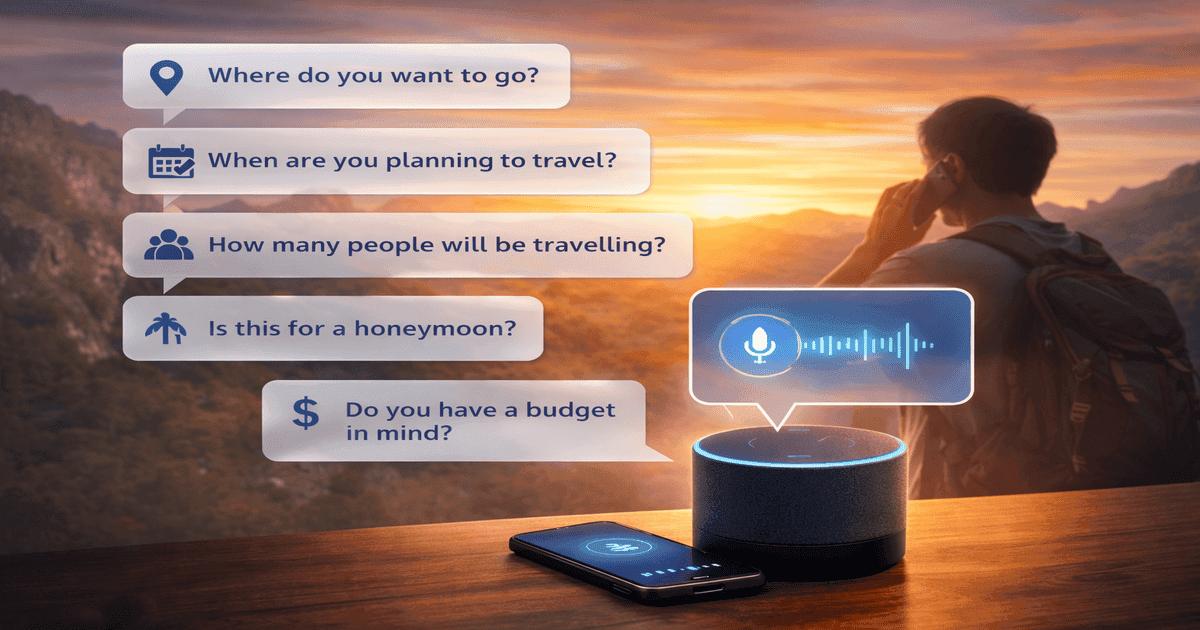
Voice AI can act as the first layer between new enquiry and expert human follow-up. Instead of asking a travel consultant to manually call every fresh lead and spend the first few minutes discovering basic trip details, the AI can start that interaction early and gather structured information in a conversational way.
The system can ask where the traveller wants to go, when they are planning to travel, how many people are travelling, what kind of trip they are planning, and whether they already have a budget range in mind. It can also ask whether they would prefer a callback later if they are busy, and whether they are looking for a standard package or more personalized planning.
This gives the business a better-shaped lead before the human team gets involved. Instead of looking at a raw form submission with only name and phone number, the consultant receives an enquiry with real travel context.
Why this matters for travel sales productivity
The real value here is not just automation for the sake of automation. It is better allocation of expert time. Travel consultants are most valuable when they are helping a qualified traveller compare options, understand itineraries, evaluate hotels, discuss visa logistics, or move closer to booking. They are much less valuable when repeating basic screening work all day across weak or unclear enquiries.
When destination, timeline, and budget are already partially captured, the first human conversation becomes sharper. The consultant can respond with better relevance, route the traveller to the right expert, and avoid wasting early momentum on discovery questions that could have been handled earlier.
This also helps agencies separate serious travellers from casual browsers. Not every lead needs the same depth of human follow-up at the same moment. A cleaner qualification layer makes that distinction much easier.
How Xtreme Gen AI fits into the travel workflow
At Xtreme Gen AI, we see this as a qualification and routing problem, not only a calling problem. Travel businesses do not just need faster contact. They need more useful first-touch conversations that capture enough context to improve what happens next.
Our Voice AI system can begin the first interaction soon after an enquiry is received, ask the right trip qualification questions, and push structured outcomes back into the workflow. That helps travel teams understand whether the lead is destination-ready, budget-aware, timeline-clear, or better suited for follow-up before human planning begins.
For travel agencies, holiday planners, and tour operators handling inbound demand at scale, this creates a more disciplined lead handoff process. Instead of every raw enquiry landing the same way, the business gets a clearer path to prioritization.
What travel leaders should take away
If your team is struggling with too many vague travel enquiries, the answer may not be only more sales hiring. It may be better first-touch qualification. The earlier your business understands destination intent, travel timing, and budget comfort, the easier it becomes to route human attention where it has the highest commercial value.
The strongest travel businesses are not just fast at calling leads. They are efficient at identifying which conversations deserve expert time and which ones need a lighter follow-up path.
Conclusion
Travel lead qualification is not only about making contact. It is about capturing the right trip signals before human handoff. When travel agencies understand destination, budget, and travel timeline early, they can prioritize leads better, improve consultant productivity, and create more relevant sales conversations.
That is where Voice AI can create real value. By handling early qualification in a structured and conversational way, it helps agencies build cleaner handoffs, sharper follow-up, and better use of expert travel sales time.
For travel businesses in India, the goal is not just faster calling. It is smarter qualification before itinerary planning begins.
Frequently Asked Questions
1. What exactly can Voice AI qualify before a human travel consultant takes over?
Voice AI can capture the first layer of trip context that helps a sales team decide what to do next with a travel enquiry. This usually includes destination interest, likely month or date range of travel, number of travellers, trip type such as honeymoon or family holiday, and a broad sense of budget comfort. It can also capture useful follow-up signals like departure city, whether the traveller wants a callback later, and whether they are looking for a standard package or something more customized. The goal is not to replace itinerary planning. The goal is to make sure the human consultant receives a lead with enough travel context to have a sharper and more relevant sales conversation.
2. Will travellers actually respond well to Voice AI in the travel industry?
They usually respond well when the interaction is simple, timely, and relevant. Travel enquiries often begin with incomplete information, and many travellers are comfortable answering a few basic questions if it helps them get a more suitable callback later. The experience works best when the AI keeps the conversation natural, asks only practical trip-planning questions, and does not sound overly robotic or pushy. If the interaction is designed well, travellers do not experience it as a replacement for human help. They experience it as an easier first step before speaking to a travel expert.
3. Can Voice AI help travel agencies prioritize serious leads over casual browsers?
Yes, that is one of the strongest use cases. Not every enquiry deserves the same level of immediate human effort. Some travellers have a clear destination, timeline, and intent to book soon. Others are only exploring ideas or comparing options casually. Voice AI helps separate these cases by capturing early intent signals in a structured way. Once budget comfort, destination clarity, and travel timing are understood, the business can decide whether the lead should go straight to a consultant, stay in follow-up, or be nurtured more lightly. This improves human productivity because expert time goes first to the leads most likely to convert.
4. Is Voice AI going to replace travel consultants?
No, it is better understood as a qualification and routing layer before the human sales conversation. Travel consultants are most valuable when they are discussing itinerary options, hotel choices, visa concerns, package fit, and booking decisions. They are less valuable when their time is spent repeatedly collecting basic discovery information from every fresh enquiry. Voice AI handles that early-stage screening so the consultant can step into the conversation with more context and better relevance. In that sense, it supports the human team rather than replacing it. It helps agencies use expert attention more intelligently.